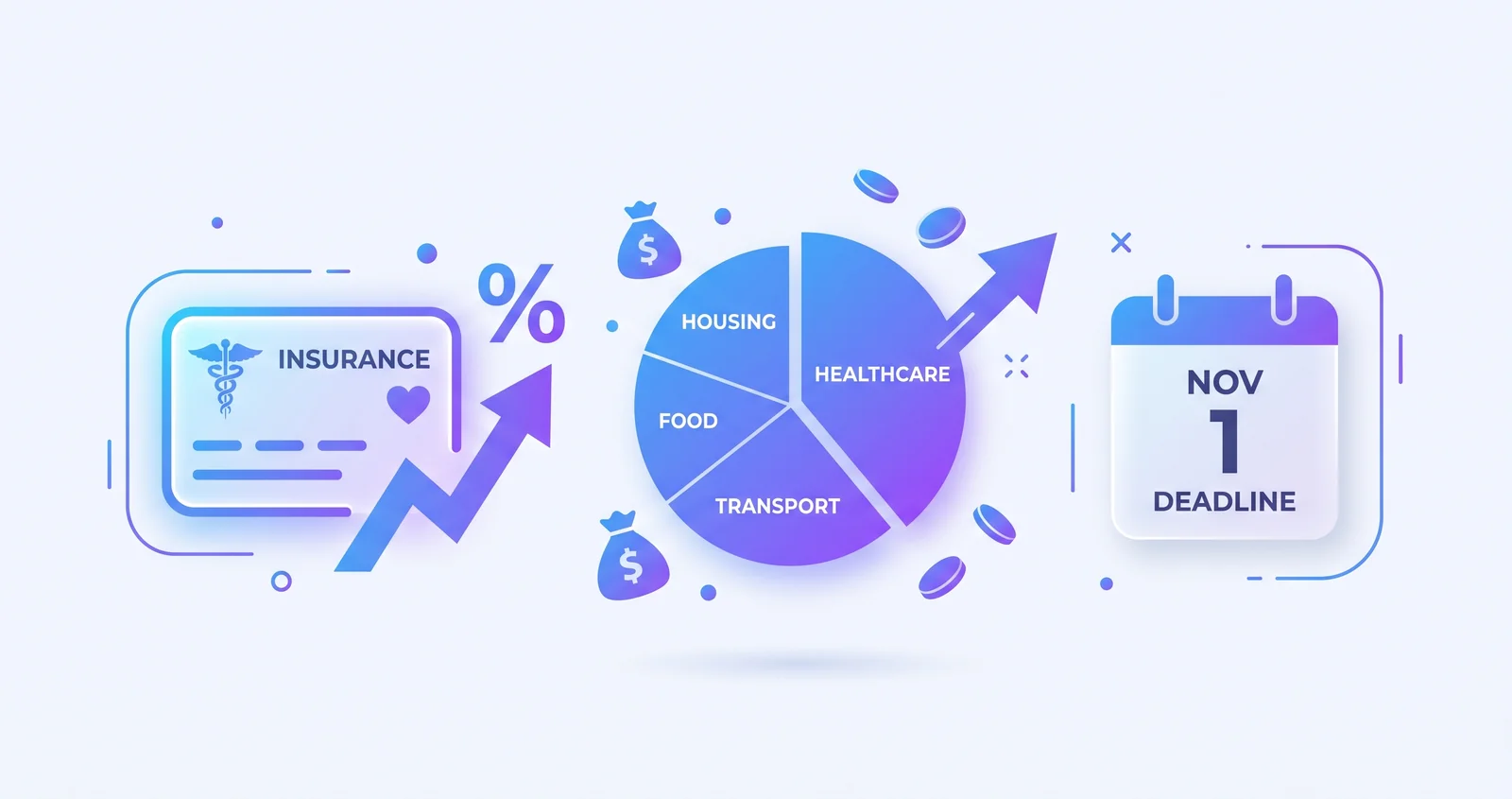
- ACA marketplace insurers are proposing a median 15% premium increase for 2027, across 276 insurers nationwide (KFF), following a 20% median finalized increase in 2026 — two straight years of double-digit hikes after roughly 2% average annual increases from 2020-2025.
- The biggest driver: enhanced ACA premium tax credits expired December 31, 2025 and were not renewed by Congress, adding an estimated 4 to 7.7 percentage points to the 2027 increase as healthier enrollees leave the marketplace.
- The 2027 out-of-pocket maximum rises to $12,000 for individuals (from $10,600) and $24,000 for families (from $21,200).
- A real-world example: a 40-year-old in Indianapolis earning $65,000 on an Anthem silver plan would pay $546/month in 2027 versus $477/month in 2026 for identical coverage.
- Open enrollment runs November 1, 2026 through January 15, 2027 — enroll by December 15 for coverage starting January 1.
What's Happening to Health Insurance Costs for 2027
Every fall, insurers file the rates they want to charge for the coming plan year — and this year's filings landed hard. According to KFF's analysis of preliminary rate filings from 276 insurers across all 50 states and Washington, D.C., the median proposed premium increase for 2027 ACA marketplace plans is about 15%. Individual insurer requests range widely, from a 1% decrease to a 54% increase, with roughly 63% of insurers proposing hikes somewhere between 10% and 25%.
That follows an already-steep 20% median finalized increase in 2026 — a jump the Commonwealth Fund calls "extraordinary" compared with the roughly 2% average annual increase ACA premiums saw between 2020 and 2025. In other words, this isn't a one-year blip; it's the second consecutive year of unusually large increases, and it's landing right as households are also digesting higher costs elsewhere in their budgets.
Why Are Premiums Rising So Much?
Insurers point to several factors driving 2027 rates higher:
- Rising medical costs. A median underlying medical cost trend of about 10%, driven by contract increases with hospitals and providers.
- General inflation pushing up the cost of care across the healthcare sector.
- Healthcare labor shortages, which are driving higher wages and reimbursement demands from providers.
- Claims severity, as more care gets coded and billed at higher-acuity levels.
- Specialty drug costs, including GLP-1 weight-loss and diabetes medications, which some insurers report have tripled in cost.
But the single largest new factor is a policy one, not a medical one — and it's the reason this year's increase is so much bigger than a typical medical-cost bump.
The Real Trigger: Enhanced Subsidies Expired
The enhanced ACA premium tax credits — first introduced in 2021 and extended through 2025 — expired on December 31, 2025, after Congress did not act to renew them. The House of Representatives did pass a three-year extension bill in January 2026, but it never became law before the enhanced credits lapsed.
That expiration is doing more damage to premiums than it might first appear, because of a phenomenon insurers call risk-pool deterioration: as subsidies shrink or disappear, the healthiest, lowest-cost enrollees are the ones most likely to drop coverage entirely, since they have the least to lose from going uninsured. That leaves a smaller marketplace population that's sicker and more expensive to cover on average — which pushes premiums up for everyone who remains. Analysts estimate this effect alone is adding 4 to 7.7 percentage points to the 2027 rate increase, on top of ordinary medical cost growth.
The original, smaller ACA premium tax credits (from the 2010 law) are still in place and didn't expire. What ended was the temporary enhancement to those credits — the boost that made coverage cheaper (or free) for many middle-income households since 2021. Some people may still qualify for the smaller, original subsidy amount.
What This Looks Like in Real Dollars
National medians only tell part of the story — what matters is what shows up in your own bill. Reporting on the 2027 rate changes includes a concrete example: a 40-year-old enrollee in Indianapolis earning $65,000 a year, on an Anthem silver-tier plan, would see their premium rise from $477/month in 2026 to $546/month in 2027 for the same coverage — a jump of about $69 a month, or roughly 14.5%, in line with the national median.
| Period | Median Premium Change | Context |
|---|---|---|
| 2020 – 2025 (avg./yr.) | ~2.0% | Normal, stable growth (Commonwealth Fund) |
| 2026 | ~20% (finalized) | First shock — subsidy cliff already looming |
| 2027 | ~15% (proposed, est.) | Second straight double-digit year — subsidies now expired |
Don't wait for the higher premium to hit your bank account to feel the impact. Plug your expected new premium into our Budget Calculator now to see exactly how a 10-25% jump reshapes your monthly numbers, and adjust other categories ahead of time.
Out-of-Pocket Maximums Are Rising Too
Premiums aren't the only cost going up. The ACA's annual out-of-pocket maximum — the most you'd pay for covered in-network care in a year before your plan covers 100% — is also increasing for 2027:
| Coverage Type | 2026 Max | 2027 Max | Increase |
|---|---|---|---|
| Individual | $10,600 | $12,000 | +$1,400 |
| Family | $21,200 | $24,000 | +$2,800 |
For anyone who uses their plan heavily — a chronic condition, an upcoming procedure, a new baby on the way — that higher ceiling matters as much as the monthly premium when comparing plans this open enrollment.
💰 See the Full Impact on Your Take-Home Pay
If your premium is deducted from your paycheck, a bigger deduction means a smaller net check. Model it with our Take-Home Paycheck Calculator before open enrollment closes.
Use the Paycheck Calculator →When Open Enrollment Starts — and Why the Window Stayed Long
Open enrollment for 2027 ACA marketplace plans runs from November 1, 2026 through January 15, 2027 on HealthCare.gov. Enroll by December 15, 2026 and your new coverage starts January 1, 2027; enroll after that date and your plan typically won't kick in until February 1.
That full six-and-a-half-week window almost got shorter. A rule proposed for 2027 would have cut the enrollment period off at December 15 instead of January 15, but a federal judge vacated that rule, and the Centers for Medicare and Medicaid Services confirmed in August 2026 that the longer window — November 1 to January 15 — would stay in place.
Because individual insurer rate changes range from a 1% decrease to a 54% increase, the plan that was cheapest last year may not be this year. Auto-renewal is convenient, but comparing plans fresh during open enrollment is the single biggest lever most people have to soften this year's increase.
What to Do Before Your Plan Renews
- Shop your plan, don't just renew it. With increases ranging from -1% to +54% depending on the insurer, actively comparing plans across the marketplace can meaningfully change your outcome.
- Check your subsidy eligibility again. The original (non-enhanced) ACA premium tax credits are still available, and some households may still qualify for a reduced amount even without the expired enhancement.
- Rebuild your monthly budget now around your expected new premium, rather than being surprised when the first higher bill arrives.
- Consider a high-deductible plan paired with an HSA if you're healthy and want to lower your monthly premium in exchange for a higher deductible — just weigh that against the new, higher out-of-pocket maximums.
- Mark your calendar for November 1 (enrollment opens) and December 15 (deadline for January 1 coverage) so you're not rushed in the final days of the window.
Frequently Asked Questions
1. How much are health insurance premiums rising in 2027?
ACA marketplace insurers have proposed a median premium increase of about 15% for 2027, according to KFF's analysis of filings from 276 insurers across all 50 states and D.C. Individual insurer requests range from a 1% decrease to a 54% increase, with about 63% of insurers proposing hikes between 10% and 25%. This follows a 20% median finalized increase in 2026.
2. Why are health insurance premiums going up so much?
Insurers cite rising medical costs (a median 10% underlying medical trend), general inflation, healthcare labor shortages, and higher-cost specialty drugs like GLP-1 medications. But the single biggest new factor is the expiration of enhanced ACA premium tax credits on December 31, 2025, which analysts estimate is adding 4 to 7.7 percentage points to the 2027 increase as healthier enrollees leave the marketplace, leaving a smaller, sicker, and more expensive risk pool behind.
3. Did the enhanced ACA subsidies get extended?
No. The enhanced premium tax credits, first introduced in 2021 and extended through 2025, expired on December 31, 2025, after Congress did not act to renew them. The House passed a three-year extension bill in January 2026, but it did not become law before the subsidies lapsed.
4. When does 2027 health insurance open enrollment start?
Open enrollment for 2027 ACA marketplace plans runs from November 1, 2026 through January 15, 2027 on HealthCare.gov. Enrolling by December 15, 2026 ensures coverage starts January 1, 2027; enrolling after that date typically pushes your start date to February 1. A federal judge vacated a rule that would have shortened this window to December 15, so the full six-and-a-half-week period remains in place.
5. What is the 2027 ACA out-of-pocket maximum?
For 2027, the ACA out-of-pocket maximum rises to $12,000 for an individual (up from $10,600 in 2026) and $24,000 for a family (up from $21,200 in 2026). This is the most you'd pay out of pocket in a year for covered in-network care, before insurance covers 100%.
6. How can I lower my health insurance costs for 2027?
Shop around during open enrollment rather than auto-renewing your current plan, since insurers' rate changes vary widely (from a 1% decrease to a 54% increase). Compare plans across metal tiers, check if you still qualify for any subsidy under the original (non-enhanced) ACA subsidy structure, consider a Health Savings Account if you move to a high-deductible plan, and rebuild your monthly budget around the new premium before your plan renews.