
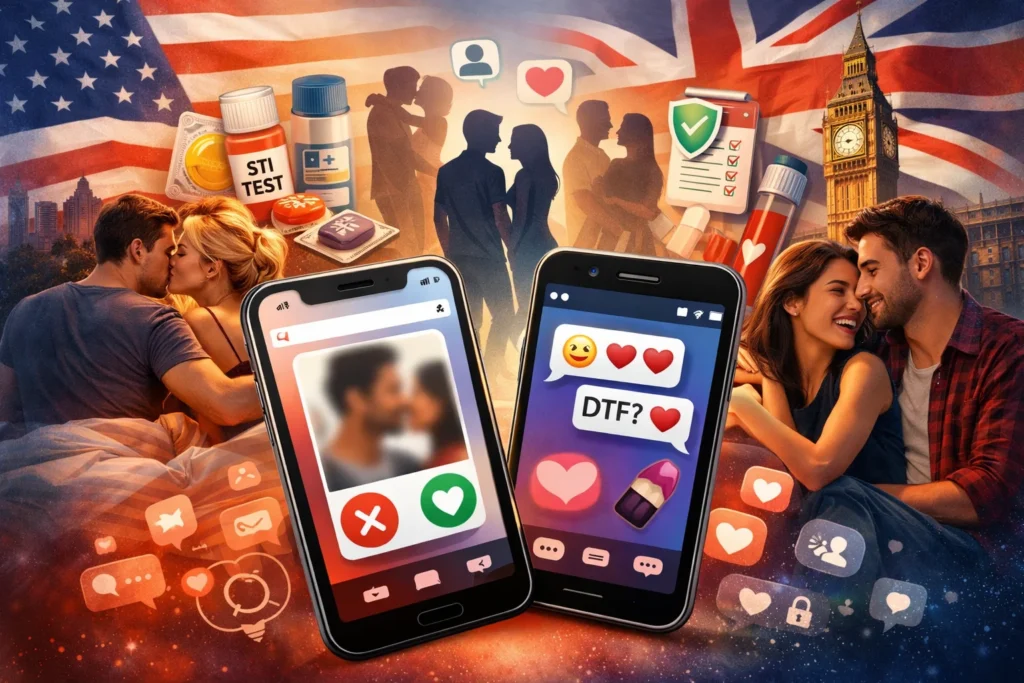
How Dating Apps Are Changing Sexual Behavior in the US and UK
Introduction
Dating apps have fundamentally altered how people connect, communicate, and build intimate relationships. In the US and the UK, apps such as Tinder, Bumble, Hinge, and Grindr have shifted dating from serendipitous meetings to connections facilitated by algorithms. This change has redefined how relationships start and reshaped sexual behavior, expectations, and societal norms.
From a rise in casual encounters to shifting discussions about consent and sexual health, dating apps are now central to modern intimacy. This blog post will examine how dating apps are influencing sexual behavior in the US and UK, looking at cultural trends, public health considerations, and what the future might bring.
The Rise of Dating Apps in the US and UK
Dating apps have become ubiquitous over the past decade. Millions of adults in the US and UK, particularly those aged 18 to 35, are actively using dating apps. Smartphones, location-based matching, and social media have streamlined the process, making dating quicker and more readily available.
Unlike the old-fashioned ways of meeting someone—through friends or random encounters—dating apps let you connect with strangers in an instant. This newfound accessibility has dramatically expanded the pool of potential partners, reshaping dating habits and sexual conduct. According to data from Pew Research Center, online dating usage has steadily increased across both countries.
The Rise of Casual Dating and Hookup Culture
A significant shift tied to dating apps is the growth of casual dating and hookup culture. Many apps prioritize quick swiping and minimal commitment, promoting short-term interactions over long-term relationships.
Research in both the US and UK consistently indicates that dating app users are more likely to report casual sexual experiences than those who don’t use them. The speed at which people can find new partners has significantly shortened the time it takes from first meeting someone to becoming intimate.
For a lot of people, such a phenomenon has made casual sex more commonplace, and the associated stigma has lessened. Though not everyone on these apps is looking for a one-night stand, the way many platforms are built and the culture they foster have made casual encounters more visible and widely accepted.
More Sexual Partners
Dating apps have also played a role in increasing the number of sexual partners for many. With a vast selection of potential matches always at hand, it’s easy for people to shift from one connection to another.
In the United States, surveys indicate that app users are more likely to report having multiple sexual partners in a relatively short time frame. The UK also observes similar patterns, particularly among younger adults and city dwellers, as highlighted in national sexual behavior studies.
The rise in partner numbers has, in turn, shifted how we view exclusivity, commitment, and the pace of relationships. It’s worth remembering, though, that this increased choice doesn’t impact everyone the same way. Some users become pickier, while others fall victim to “choice overload,” resulting in briefer connections and more frequent partner-switching.
Changes in Sexual Communication and Consent
Dating apps have fundamentally changed how people talk about sex. What used to be face-to-face conversations now often unfold via text before a first date. People now frequently broach subjects like sexual preferences, boundaries, and expectations early on.
In some respects, this process has improved communication. Users can preemptively address intentions and secure consent prior to in-person meetings, thereby mitigating potential misinterpretations. Nevertheless, the digital sphere has also presented certain difficulties.
Complaints frequently center on unsolicited explicit communications, pressure to engage in sexual activities, and the erosion of established boundaries, especially among female users. Both the United States and the United Kingdom have witnessed a heightened awareness of digital consent, underscoring that the principles of consent are equally applicable in online contexts as they are in face-to-face interactions.
Consequently, dating applications are now facing intensified scrutiny to enhance their moderation capabilities and safeguard users against harassment.
Impact on Sexual Health and STI Rates
A frequently debated consequence of dating applications pertains to their influence on sexual health. Elevated partner turnover and an increase in casual sexual encounters can potentially elevate the risk of sexually transmitted infections (STIs) if safe sex protocols are not consistently adhered to.
In the United States, the escalating incidence of STIs over the past ten years has been partially attributed to evolving sexual networks influenced by dating applications, as reported by the Centers for Disease Control and Prevention. Similar trends have emerged in the United Kingdom, especially among younger demographics, according to NHS Sexual Health data.
Although dating apps are not the exclusive factor, they can facilitate the expedited transmission of infections by fostering connections between individuals more rapidly and across broader geographical distances.
Concurrently, dating apps present avenues for sexual health promotion. Certain platforms enable users to disclose their testing status, engage in open discussions regarding protective measures, or access information pertaining to local testing facilities. When utilized judiciously, these applications can encourage safer sexual practices rather than detract from them.
Shifting Perspectives on Relationships
Dating apps have played a role in altering perceptions of relationships and commitment. In both nations, a significant number of users now perceive dating as a dynamic process, rather than a straightforward trajectory leading to marriage or enduring partnerships.
Individuals exhibit greater openness to diverse forms of connection, encompassing casual dating, open relationships, and unconventional arrangements. This transformation mirrors wider cultural shifts; however, dating applications have expedited this trend by enhancing the visibility and accessibility of alternative relationship models.
For certain individuals, this autonomy is empowering. Conversely, it can engender uncertainty, emotional exhaustion, and ambiguity regarding expectations. The effects frequently hinge on personal objectives, communication proficiency, and emotional fortitude.
Mental Health and Emotional Well-being
The influence of dating applications transcends physical conduct, impacting mental and emotional health. Constantly swiping, comparing oneself to others, and experiencing rejection can negatively impact self-esteem and body image.
Individuals in both the United States and the United Kingdom have reported feelings of burnout, anxiety, and frustration associated with app-based dating. These emotional states can, in turn, indirectly affect sexual behavior.
For instance, some people might engage in casual sexual encounters as a means of seeking validation, whereas others might choose to withdraw from dating entirely. A comprehensive understanding of how sexual behavior is evolving necessitates an examination of the emotional dimensions of app usage.
Differences Between the US and UK
Although overarching trends are similar, cultural distinctions influence how dating apps affect sexual behavior within each country.
In the United States, social life extensively integrates dating apps across numerous regions, with significant connections to urban culture and college settings. Discussions concerning sexual health frequently highlight individual accountability and the availability of healthcare provisions.
In the United Kingdom, dating applications are similarly prevalent, yet they function within a framework characterized by more centralized public health infrastructures and national sexual health initiatives. British users may benefit from more readily accessible complimentary testing services, potentially impacting their safer sex practices.
Notwithstanding these distinctions, the fundamental behavioral modifications instigated by dating applications exhibit a striking degree of consistency across both nations.
The Influence of Technology and Algorithms
Algorithms exert a concealed but significant influence on sexual conduct. Matching systems prioritize specific profiles, physical appearances, and behavioral patterns, thereby subtly affecting the frequency and nature of interpersonal encounters.
This dynamic can serve to reinforce prevailing beauty standards, promote superficial evaluations, and shape societal norms regarding sexual desirability. Over the years, the decisions made by these algorithms have shaped dating experiences, the variety of partners people meet, and the sexual networks that form, both in the United States and the United Kingdom.
As technology advances, dating apps could have a growing impact on not just who people connect with, but also how they navigate intimacy.
Looking Ahead
Dating apps aren’t going anywhere. They’ll likely continue to change, mirroring shifts in societal views on sex and relationships. We might see more robust safety measures, improved tools for consent, the inclusion of sexual health information, and greater transparency about users’ goals.
For those using these apps, the main hurdle will be finding a balance between ease of use and their emotional and physical health. Policymakers and healthcare professionals will need to adjust sexual health education and services to accommodate the digital-centric dating environment.
Conclusion
Dating applications have significantly transformed sexual conduct within the United States and the United Kingdom. They have broadened access to potential partners, normalized casual sexual encounters, modified the discourse surrounding consent, and influenced sexual health patterns.
Although these shifts present novel liberties and prospects, they simultaneously introduce complexities concerning safety, emotional health, and public health. Comprehending the impact of dating apps on sexual behavior is crucial for users, healthcare providers, and society at large.
Through responsible utilization, transparent communication, and supportive infrastructures, dating apps can contribute to a more informed and healthier approach to contemporary intimacy.