
Calculator for Baker’s Percentage
I still remember the first time someone let me help them in their kitchen. They were standing over a counter covered in flour, scratching their heads and trying to figure out how much water to add without ruining the dough. They mumbled, “If only this math could do itself.” That’s where I come in: I’m your friendly Baker’s Percentage Calculator. I remove the uncertainty from baking, allowing you to concentrate on the aroma of freshly baked bread.
What is a calculator for Baker’s Percentage?
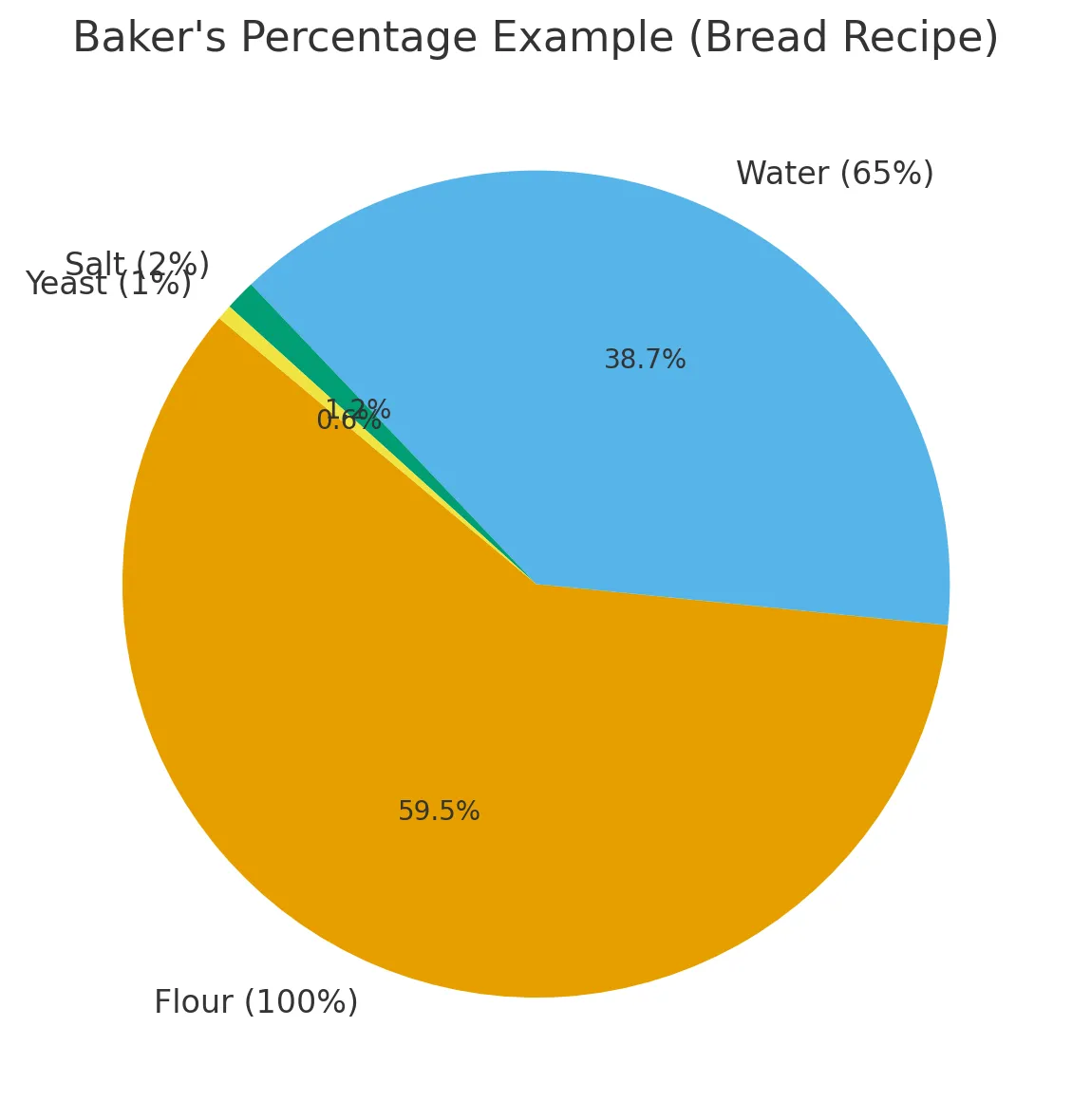
You can think of me as your baking buddy. I don’t just measure out ingredients with random cups and spoons; I use baker’s math, which means that flour is always set at 100%, and every other ingredient is figured out as a percentage of that flour weight.
100% of the flour
Water, salt, yeast, and other things = % of the flour
It’s like me saying, “Flour is the standard,” while holding a measuring stick. It is the standard by which everything else is measured. It’s straightforward, right?
What is the significance of the Baker’s Percentage Calculator?
Have you ever made bread that was too dense or pizza dough that was too sticky? That usually happens when the ratios are wrong. By using me, you:
Every time, follow the same recipes.
You can easily make more or less, whether you need one loaf or a whole bakery full.
Know how much water to add (the key to making bread that is chewy and airy).
Don’t let your dough be bland or worse, lifeless. Make sure the salt and yeast are in the right amounts.
When baking, being exact is more important than you think. Your dough will become an unmanageable swamp if you add too much water. You won’t have to deal with that mess if you follow my guidance.
Step-by-Step Guide to Using the Baker’s Percentage Calculator
This is how bakers usually work with me:
Begin with the weight of the flour.
Let’s say you have 1000 grams of flour. That’s always true.Add other things.
Water: 700 g (70%)
Salt: 20 g (2%)
Yeast: 10 g (1%)
I’ll do the math.
I’ll show you the percentages and the total weight of the dough right away.Make changes as needed.
Want the dough to be wetter? Raise the water level to 75%. Want more taste? Make the salt 2.5%.
It’s like turning the knobs on a stereo until the music sounds just right.
Pizza dough is a real-life example.
Think about making pizza in the Neapolitan style. This is what a traditional recipe might look like:
1000 g (100%) of flour
650 g (65%) of water for a crust that is soft and airy
20 g (2%) salt
5 g (0.5%) of yeast
The total amount of dough is 1675 g. That’s enough for about six pizzas. You’d probably guess without me. You are a dough scientist with me.
Advantages of the Baker’s Percentage Calculator
Consistency: Every time, the results are perfect.
Flexibility: Easily double or cut recipes in half.
Clarity: Get a better idea of how hydration and fermentation work.
Use the same method that professional bakers swear by for a professional touch.
And let’s be honest: it feels wonderful to bake with confidence instead of hoping for the best.
Things to Keep in Mind / Limitations
I have a lot of power, but I’m not a magician.
I don’t take into account things like humidity or temperature in the room.
Different types of flour absorb water in different ways. For example, bread flour and all-purpose flour can make it difficult to stay hydrated (source on flour absorption).
I won’t be able to taste your bread, but I wish I could. You will still need your baker’s instincts to change the flavor.
Questions and Answers About the Baker’s Percentage Calculator
Q: Can I also use this for cookies and cakes?
A: Yes, but baker’s math is best for breads and doughs.
Q: What is the best percentage of water?
A: 65–75% is a common amount for bread. Pizza is about 60–70%. What is ciabatta? Ciabatta is more likely to range from 80–85%.
Q: Is it possible to make recipes for big batches?
A: Yes. That’s one of my special skills. The math is the same no matter how many loaves you bake.
You might also like these tools:
If you enjoy working with numbers and precision, you will likely appreciate these tools as well:
Percentage Calculator: a great tool for math every day.
Fraction Ratio Calculator: great for scaling recipes.
Macros Calculator for Weight Loss — record what you eat while you bake.
Calorie Deficit Calculator: Keep those bread cravings in check.
Compound Interest Calculator: If you want your savings to grow like dough.
Visit Your Calculator Hub to see the full hub for even more useful tools.
Final Thoughts
In the end, I’m more than just a number on a screen. I’m the quiet person who helps you bake and makes it less stressful and more enjoyable. I’ll keep your ratios right so that your dough acts the way it should, whether you’re making a crusty baguette, a chewy pizza base, or just trying out sourdough.
So the next time you’re about to use a calculator—or worse, guess—let me do the math for you. Why worry about percentages when you could be smelling bread that just came out of the oven?
Call to Action: Are you ready to bake more intelligently, not harder? Try the Baker’s Percentage Calculator now, and check out other tools at YourCalculatorHub.com.